






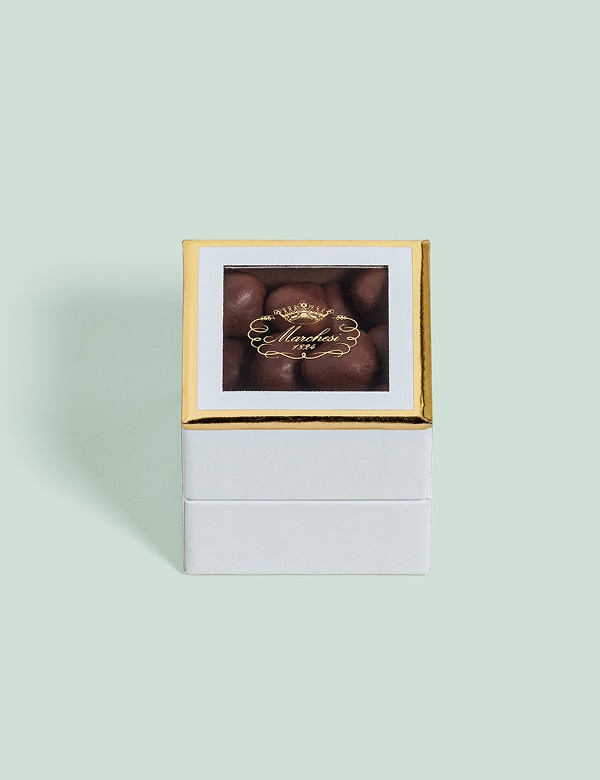










The word dragée comes from the French tradition of sugar-coated confections — a name that traces back through Latin to tragemata, sweets served at the end of a meal. In medieval Verdun, apothecaries began coating almonds in sugar to preserve them and make them more palatable, setting in motion a confectionery tradition that would be offered at weddings, baptisms, and moments of wish-giving across Europe. The history of dragées as celebratory tokens offered to royal guests, now omnipresent at rites of passage, still lingers in their form. They inhabit rituals as much as taste, the little spheres and ovals echoing centuries of confectionery evolution. Their gloss once signalled luxury; their hardness, durability; their sweetness, generosity. Even now, they carry a faint air of ceremony.

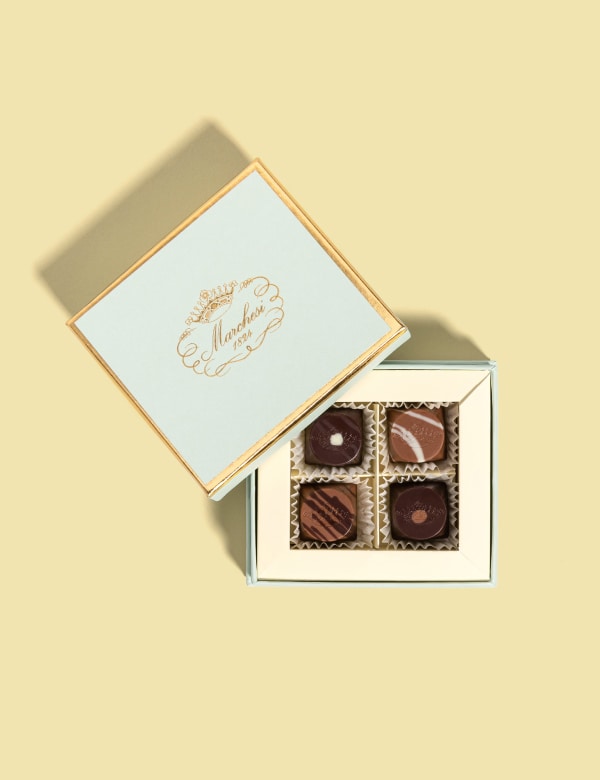
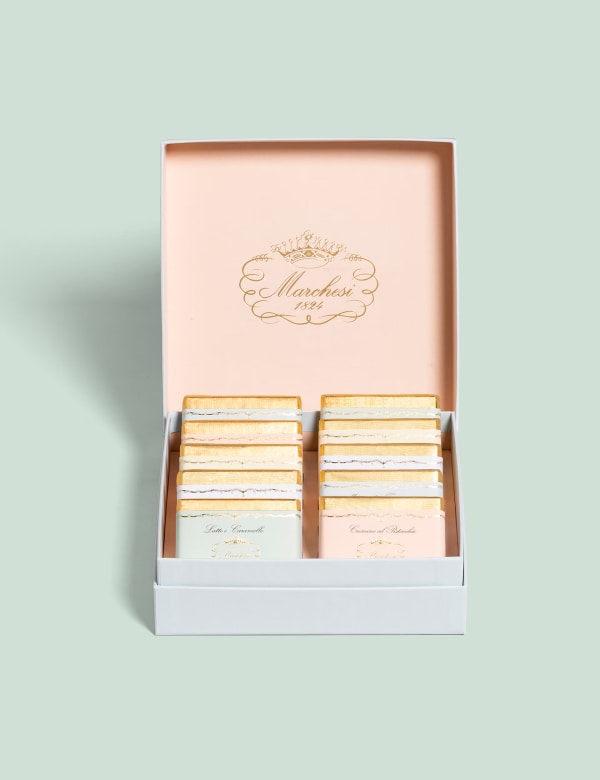
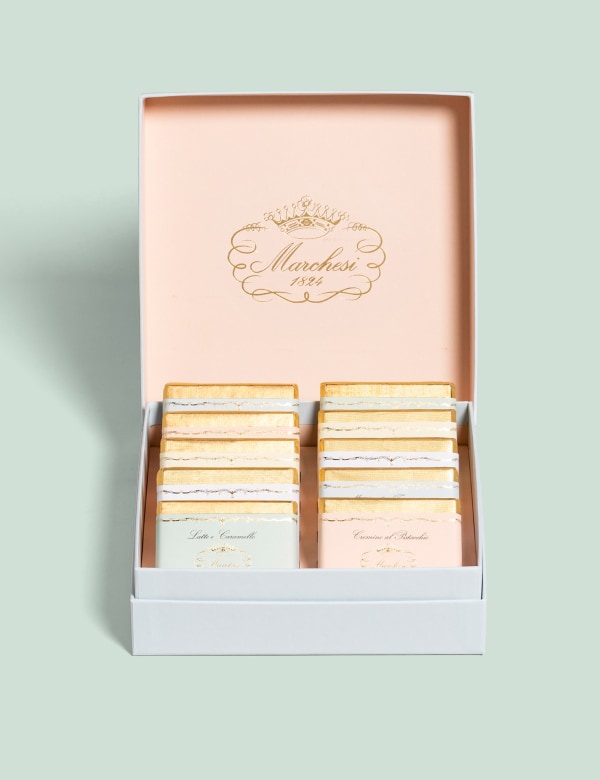
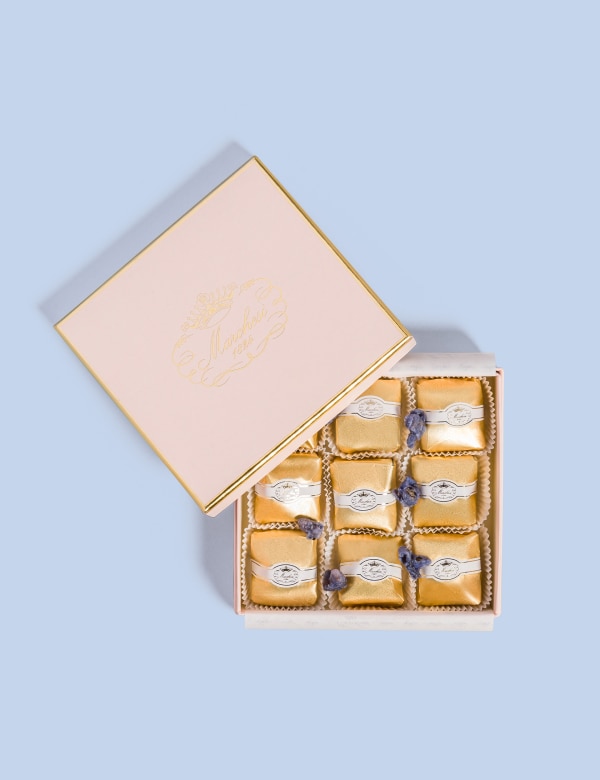
At Marchesi 1824, the pursuit of that idiosyncratic taste and texture lives on, albeit in gentle evolution. The form has not changed much — a centre, a coating, and the palpable tension between the two. What shifts is the interior, and the mood it sets once bitten. The dragée remains a study in how much personality can be compressed into something so small.